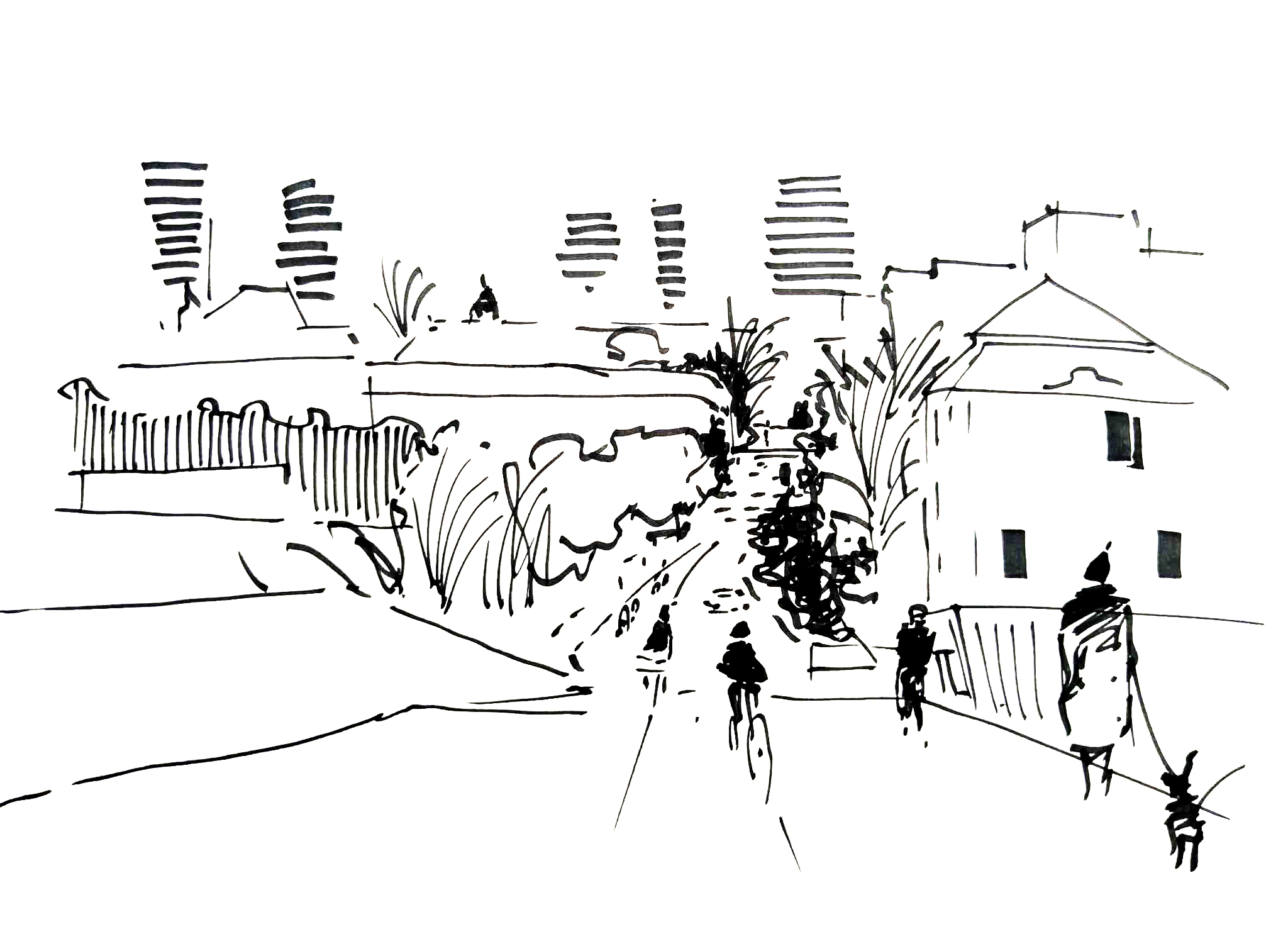




Karowa. Warszawa
- Team: Franciszek Ryczer Architekt, Anna Stępniewska Zdrowy Ogród, Michał Kempiński MKPA, Małgorzata Zmysłowska M-OST
- Mobility consultations: Jan Jakiel JKO Consulting sp. z o.o.
- Cooperation: Mateusz Polak
- Visualisations: Kozka Studio, Karolina Ptak
- Competition: 2nd prize. 2025
Karowa Street is a unique space on a European scale, combining cultural, historical, and natural
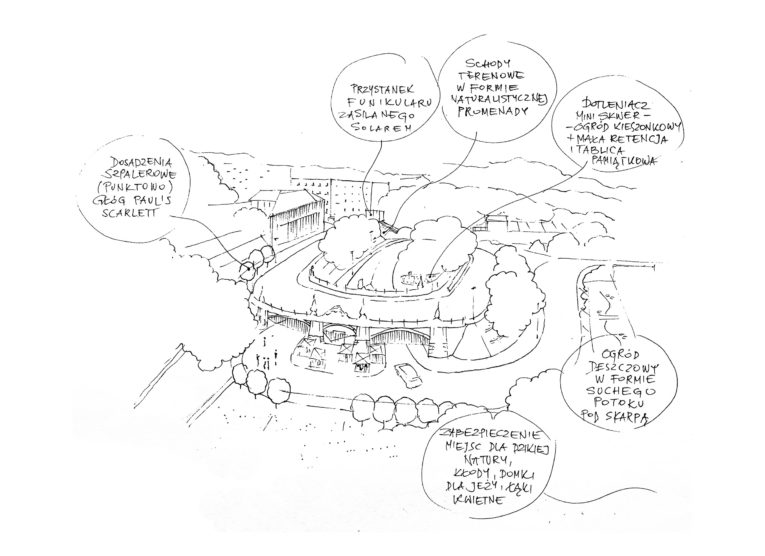
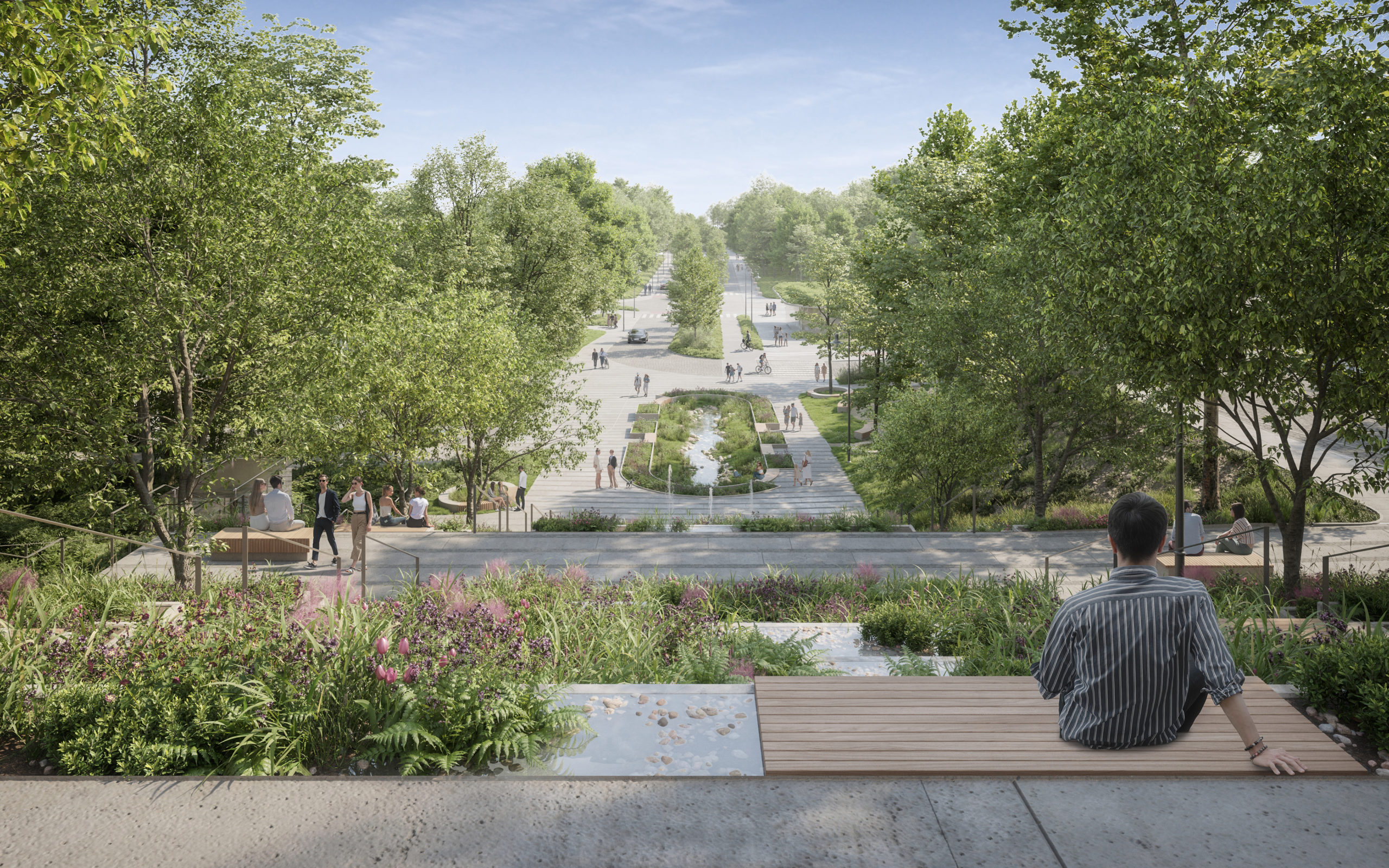
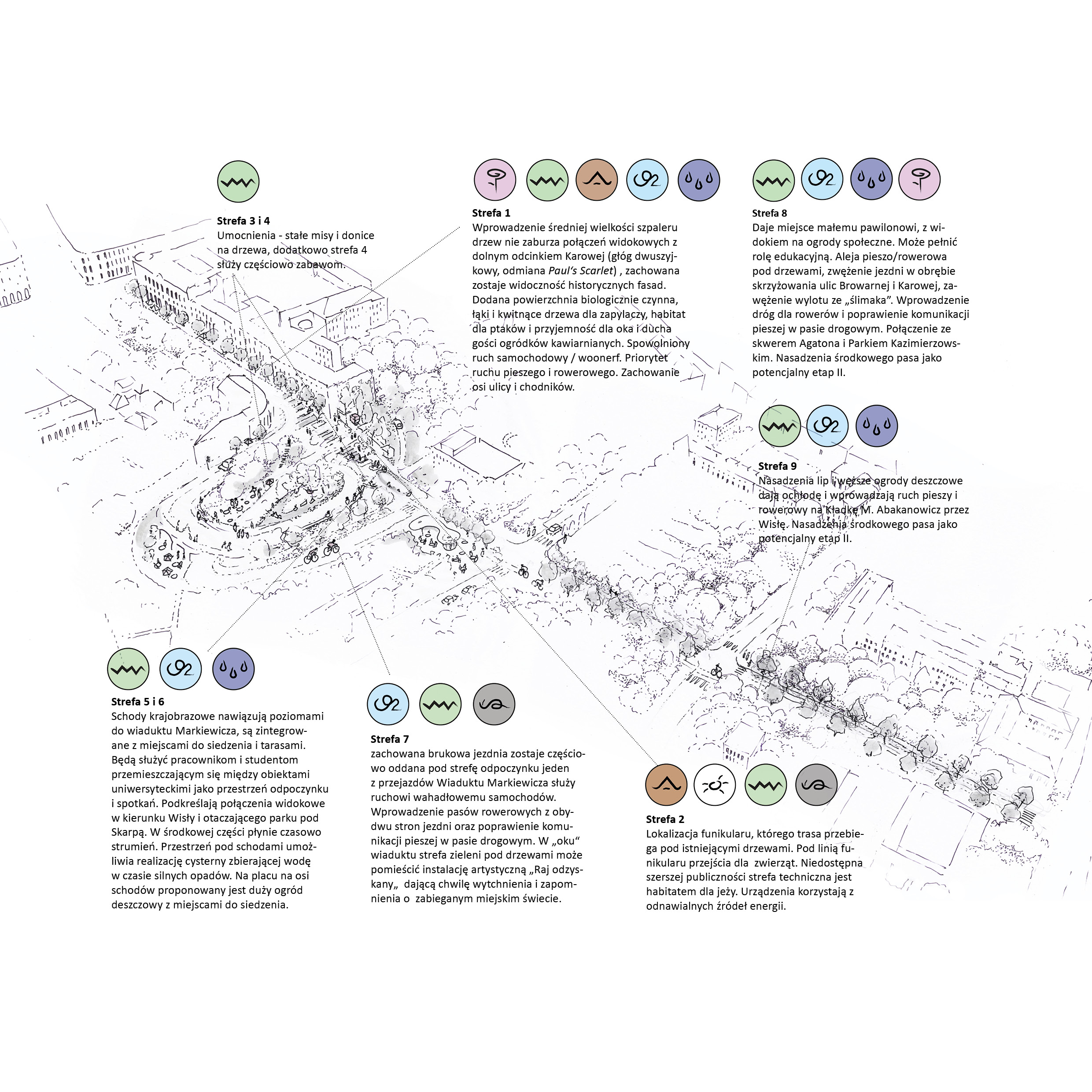
values with the potential to shape the future of Warsaw. Located within the UNESCO buffer zone and the Historic Monument area, it forms an important connection between the Royal Route, the Vistula Boulevards, and the Magdalena Abakanowicz Footbridge. The project treats Karowa as a living urban landscape – a space designed at a human scale, open to movement, encounters, and rest, where people, greenery, water, and urban fauna coexist.
NOWA Karowa is conceived as an urban stage and social forum that supports everyday life, interaction, and recreation. The concept respects the site’s heritage, restores the visual axis from
Krakowskie Przedmieście toward the Vistula, highlights the Warsaw Escarpment, and strengthens its role as a landscape element. History becomes the foundation for a contemporary, open public space.
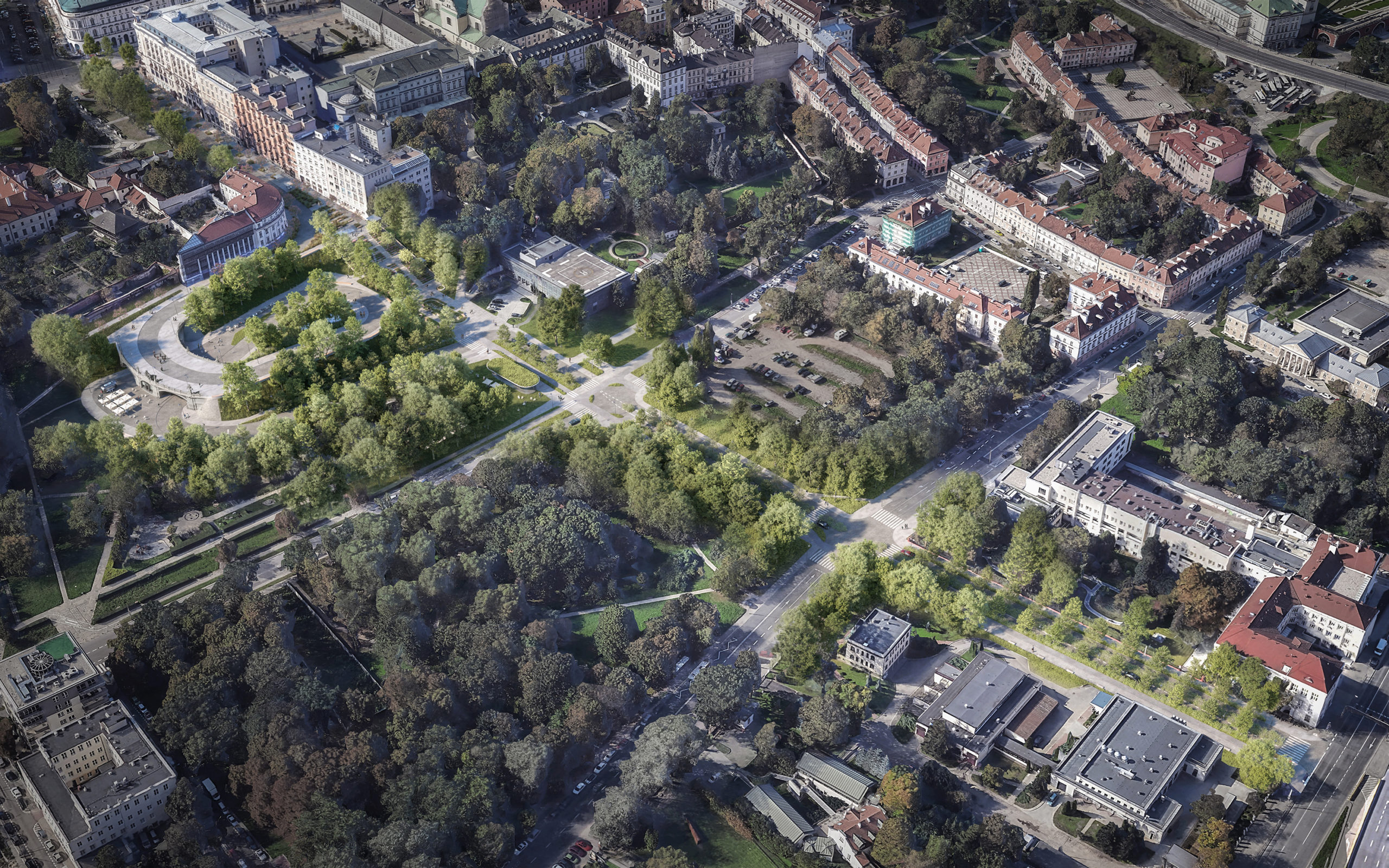
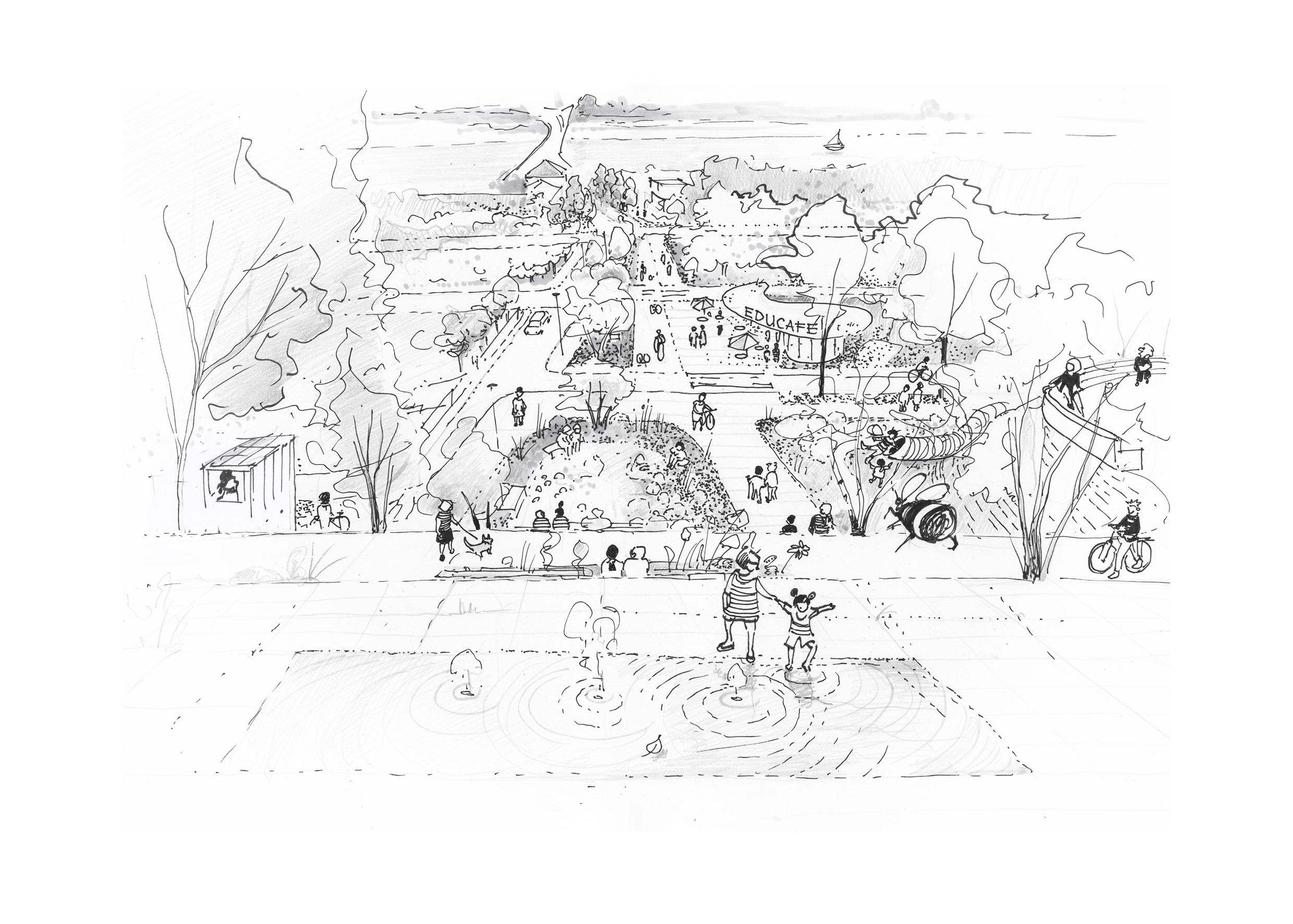
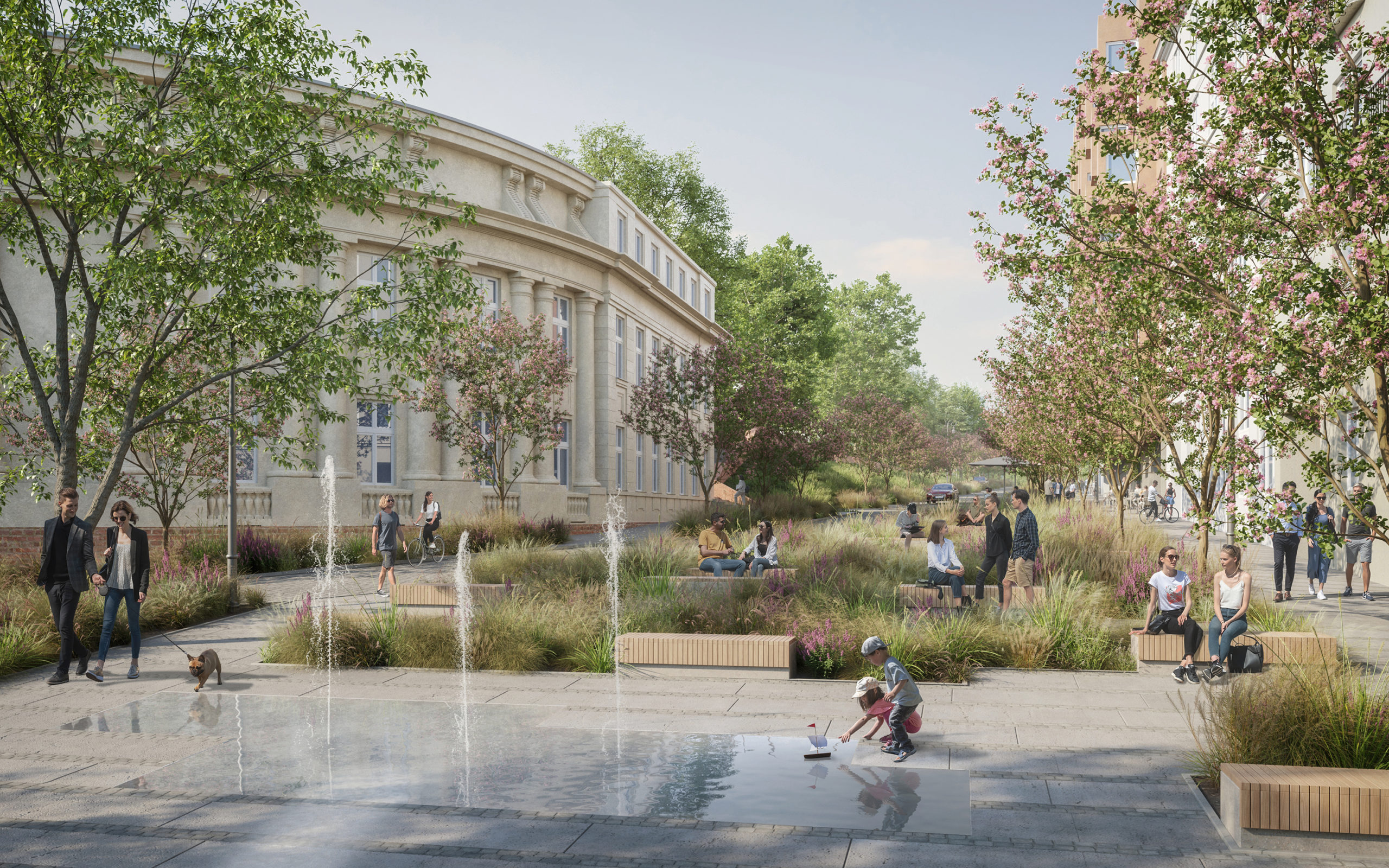
The project is based on sustainable transport, social, and environmental solutions. Pedestrians
and cyclists are given priority, strong connections are created to the Vistula Boulevards and the
pedestrian–cycle bridge, and a funicular ensures full accessibility. Car traffic is limited and subordinated to public space. A system of rain gardens, retention measures, and blue–green
infrastructure improves the microclimate, enhances biodiversity, and increases climate resilience.
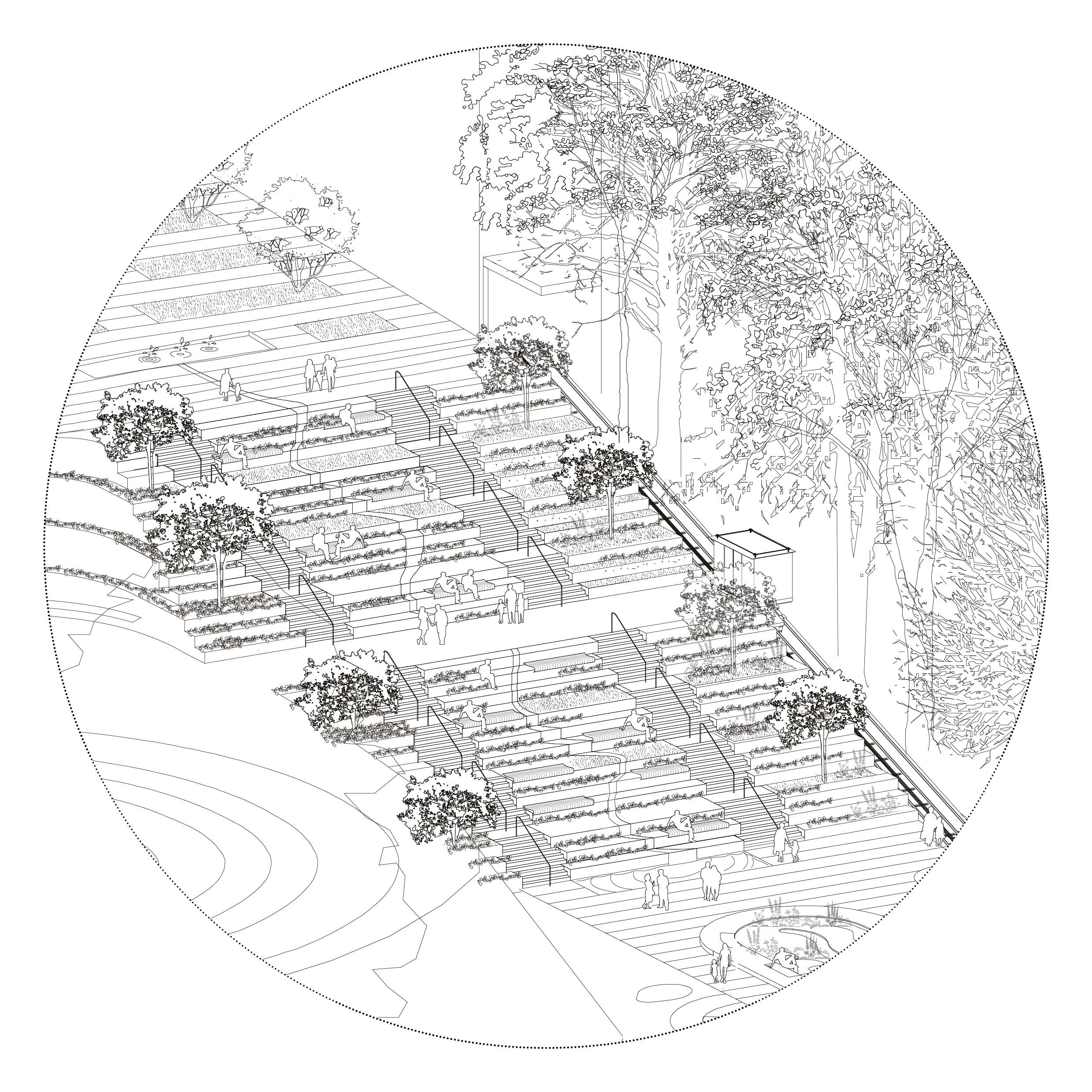
NOWA Karowa offers multiple ways of experiencing the city – from dynamic pedestrian and cycling routes to calm resting areas by the water and a funicular journey revealing the landscape of the Escarpment. A flexible street layout, defined by the rhythm of trees, allows for future adaptation and change.
It is a project in which water, the escarpment landscape, and sustainable mobility form a coherent urban ecosystem – rooted in history, focused on people and climate, and open to the future.